wait, i'm ramping!
intro
healing in world of warcraft is... weird, to say the least.
most healers get comfortable at "i know my spells and mostly how to use them." great healers also know how those spells interact and use that efficiently, which is hard because you decide what to press seconds before you find out whether it was right.
i wanted a way to plan that ahead of time, and nothing really did it. so i built one.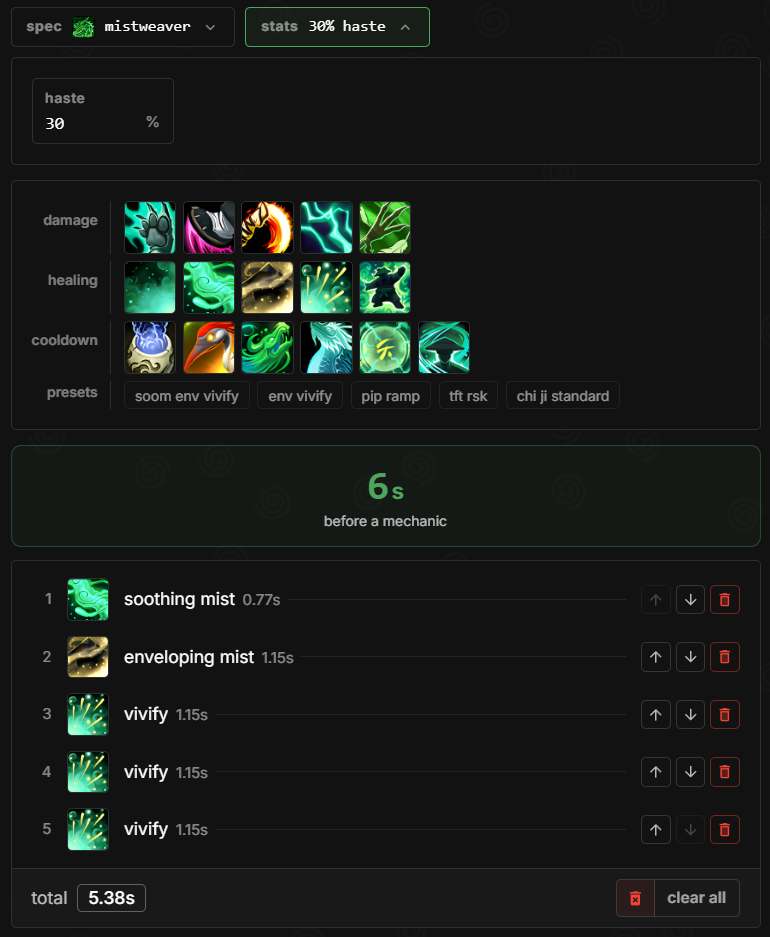
why i built it
i'd had questions about my spec for years without sitting down to answer them properly, and the only tool i had was a spreadsheet.
a spreadsheet works for a single static answer. it doesn't work for what i wanted to do: reorder a cast sequence and see what changes, move a cooldown two seconds and watch the ramp shift, or look at a timeline instead of a row of numbers.
so it became a website, which was also a reason in itself. my day job is backend, so everything past the api was new to me: structuring an app from scratch, registering a domain, hosting it, and keeping it running. it started as a local page i used for screenshots and grew into a public site.
tools
When Do I Ramp?Calculate when to start your ramp before a mechanic
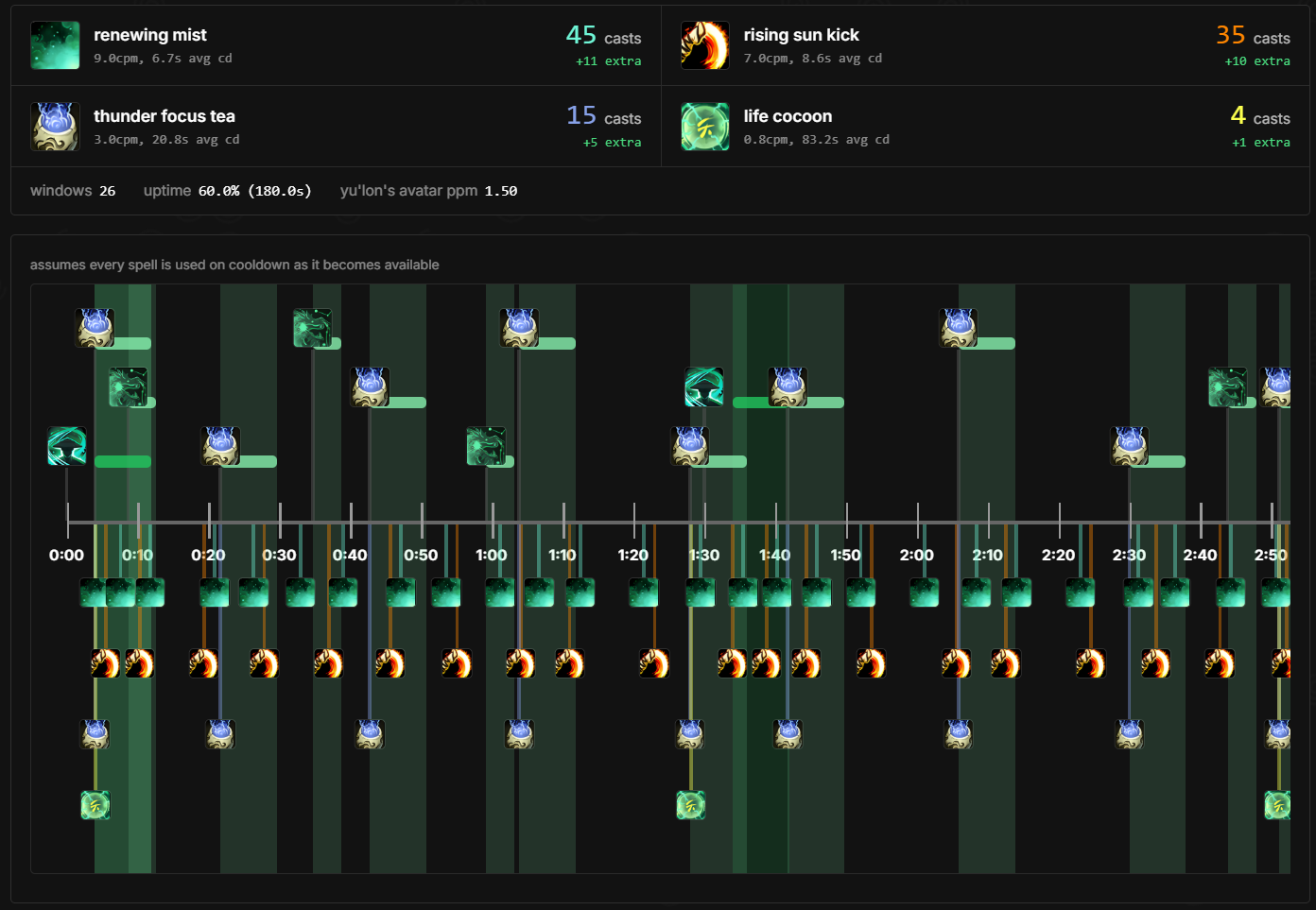
Spell TimelineBuild timelines for spell casts and cooldowns
ReferenceView spellpower data for every spell and talent
analysis pages
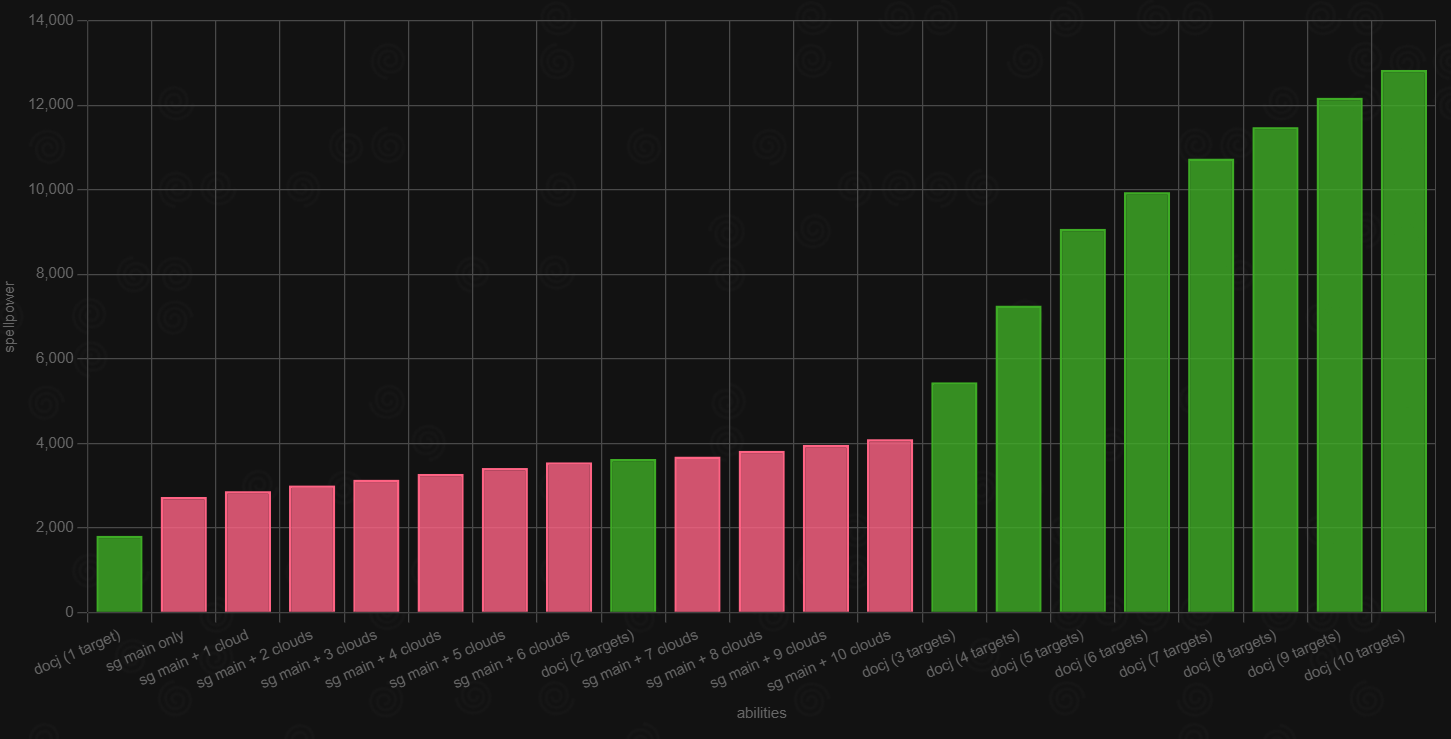
those five are on the front page. the rest are analysis pages, each answering one specific question about the math behind a spell or mechanic.
some compare two spells directly, some break down how healing is distributed across a cooldown, and some plot a single value so you can see how it scales. they all use the same underlying model.
one of them is the interactions page, a flowchart of which spells and talents modify which. how it's built is further down.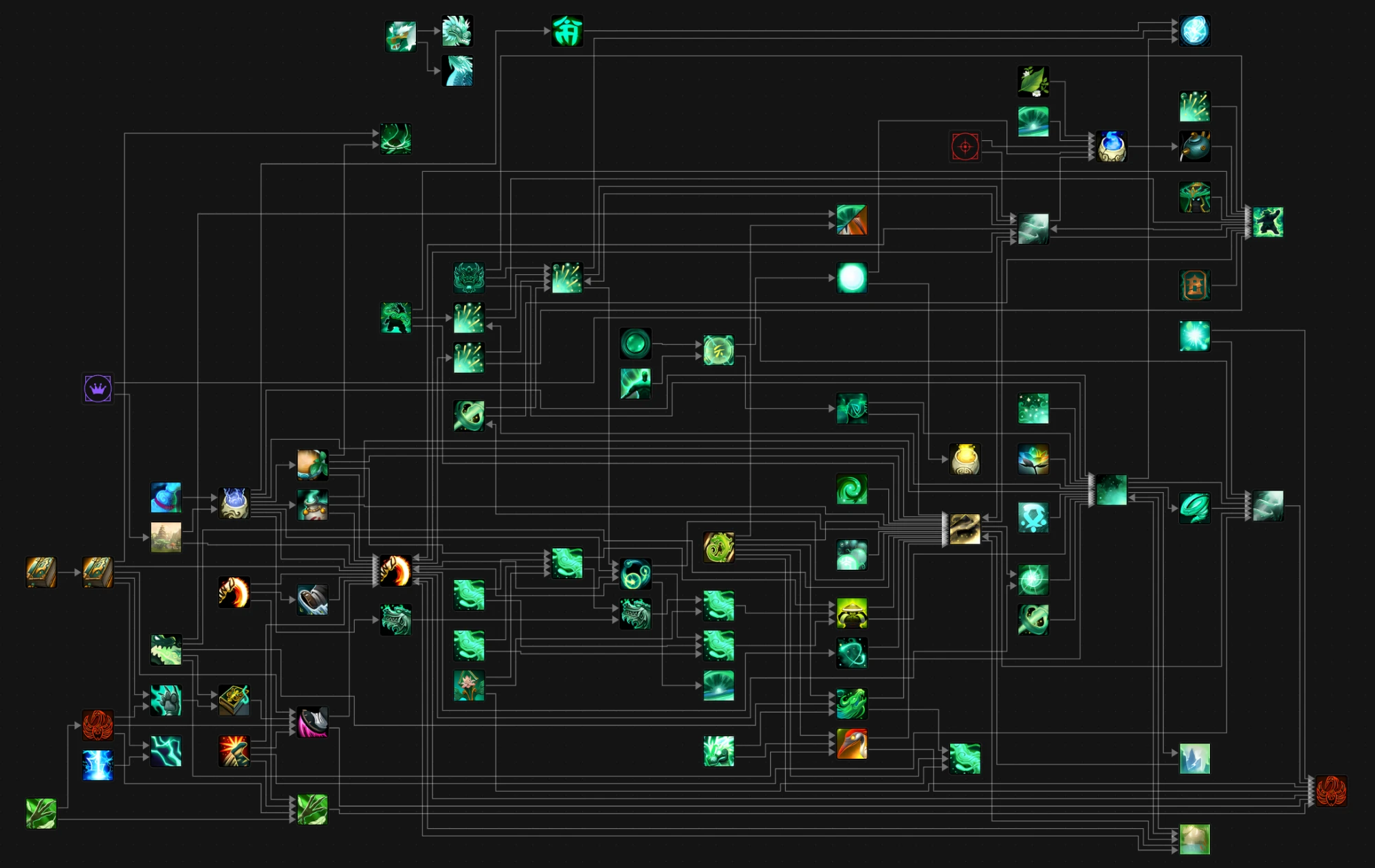
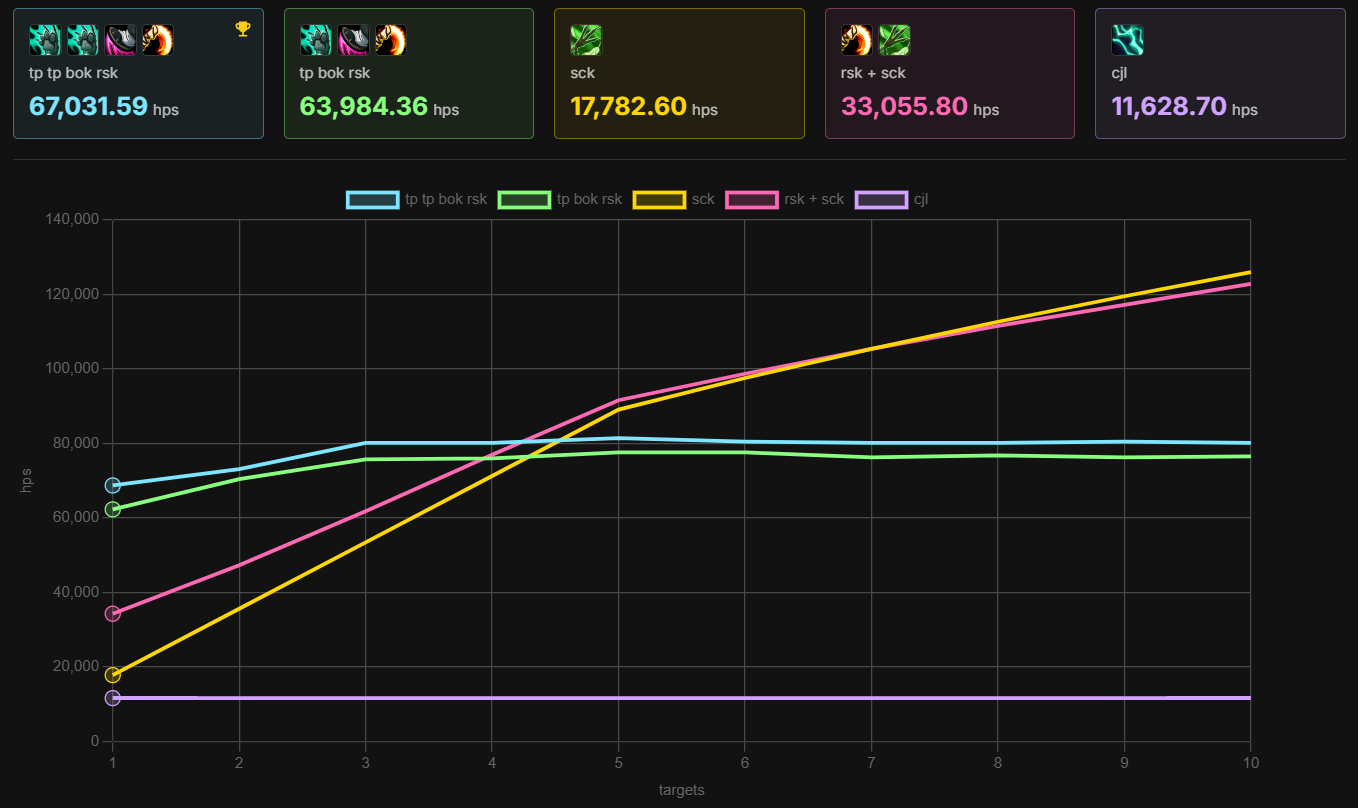
how it works
spell coefficients
every spell has a coefficient that scales with your main stat, which for healers is intellect. multiply the two and you get the spell's base healing.
the game's tooltip for a spell looks like this:
Renewing Mist
1.8% of base mana	40 yd range
Instant	9 sec recharge
2 Charges
Requires Monk
Surrounds the target with healing mists, restoring (196.65% of Spell Power) health over 20 sec.

If Renewing Mist heals a target past maximum health, it will travel to another injured ally within 20 yds.
and this is how the site stores it:
RENEWING_MIST: {
    name: 'Renewing Mist',
    id: 119611,
    icon: 'ability_monk_renewingmists',
    castTime: 0,
    cooldown: 9,
    school: SCHOOLS.NATURE,
    coeff: 1.9665,
    duration: 20,
    category: CATEGORY.HEALING,
    periodic: true,
},
coeff is the spell power percentage divided by 100. general properties sit at the top level, and values specific to one spell or talent go in a nested effects object.
the base value is rarely what you actually heal for. each spec has core passive auras that modify it, talents modify it further, and secondary stats scale the result. so a spell's real output is its coefficient multiplied through a series of modifiers:
export const calcSpellValue = (spell: spell, player: Player, type: 'damage' | 'healing' = 'healing'): number => {
    const coeff = resolveCoeff(spell.coeff, type);
    if (coeff === undefined) return 0;

    // using the law of large numbers to assume that, out of a large number of casts,
    // you will critically strike as often as your crit percentage
    const critMultiplier = 1 + (player.stats.crit / 100);
    const versMultiplier = 1 + (player.stats.versatility / 100);

    return player.stats.intellect * coeff * getSpellAura(spell, player.corePassives, type) * critMultiplier * versMultiplier;
};modifiers
getSpellAura applies the spec's core passives. it finds every passive effect that affects the spell and multiplies them into one value:
export const getSpellAura = (spell: Spell, corePassives: CorePassive | CorePassive[], calcType: 'damage' | 'healing' = 'damage'): number => {
    const passives = Array.isArray(corePassives) ? corePassives : [corePassives];
    return passives.flatMap(p => matchingEffects(spell, p, calcType))
        .reduce((aura, { effect }) => aura * (1 + (effect.value as number) / 100), 1);
};
the reduce starts at 1, so a spell with no passive modifiers gets a multiplier of 1 instead of 0. matching also follows how the game applies modifiers: heals over time only pick up periodic healing modifiers, and direct heals only pick up direct ones.
talents are handled separately, as rules evaluated against the player's build:
export interface TalentRule {
    talent: spell;
    getValue: (stats: Stats, rank: number) => number;
    appliesTo: (spell: spell) => boolean;
}
each rule has the talent it depends on, a check for which spells it affects, and a function that returns its value. that function receives the talent's rank, so multi-rank talents scale with the points spent:
{
    talent: SHARED.FEROCITY_OF_XUEN,
    getValue: (_stats, rank) => rank * SHARED.FEROCITY_OF_XUEN.effects.damageIncrease,
    appliesTo: (spell) => spell.category === CATEGORY.DAMAGE
},
tier set bonuses use the same rule format.
when several rules apply to a spell, their values multiply rather than add, so two 10% talents give 21%. that matches how the game stacks nearly all of them:
export const calculateSpellHealingMultiplier = (spell: spell, player: Player, rules: TalentRule[]): number => {
    let multiplier = 1;

    for (const rule of rules) {
        if (!isTalentEnabled(player.talents, rule.talent)) continue;
        if (rule.appliesTo(spell)) {
            multiplier *= (1 + rule.getValue(player.stats, getTalentRank(player.talents, rule.talent)));
        }
    }

    return multiplier;
};
the final healing is the base value times the talent multiplier:
export const calculateSpellHealing = (spell: spell, player: Player, rules: TalentRule[]): number => {
    const base = calcSpellValue(spell, player, 'healing');
    return base * calculateSpellHealingMultiplier(spell, player, rules);
};
keeping these apart separates two things that change at different rates. calcSpellValue covers what a spell does for a spec, which rarely changes. the rules cover what it does for a specific build, which changes whenever a talent does. each spec registers its own set of rules, so adding a spec means writing its rules without touching the shared code.
getSpellModifiers returns the same chain as a list instead of a single number: each passive effect, crit, versatility, and each talent, with a label. the site uses it to show how a number was calculated, and i use it to debug, since a wrong number points straight at the modifier causing it.
everything is recalculated on every call, with no caching. with this little data it's still instant, but it could be structured better.
interaction chart
the chart shows what each talent actually touches. the game doesn't list that anywhere in one place, and a spec has hundreds of spells and talents that modify each other.
part of the answer is already in the data. for every spell effect, simulationcraft's dump lists the spells it affects, so a script turns each one into an arrow from the spell with the effect to the spell it changes. it then cleans the result up:
- it keeps only arrows between spells the site already has data for
- it drops arrows whose only effect is "apply aura", since that says a spell applies something but not what changes
- it drops any spell that modifies more than six others, because a few broad modifiers add so many arrows that the chart becomes unreadable
procs, "after you cast x, your next y" and anything the game does in code never show up in spell data, so each spec has a hand-written file for the missing links, chart-only nodes like crit and mastery, and a few corrections:
{
    "aliases": { "Blackout Kick (Cleave)": "Blackout Kick" },
    "extraNodes": [
        { "id": -1, "name": "Critical Strike", "iconUrl": "/icons/attribute_criticalstrike.svg" }
    ],
    "links": [
        ["Thunder Focus Tea", "Renewing Mist"],
        ["Renewing Mist", "Gust of Mists"]
    ]
}
the generated file holds only ids and links. names and icons are looked up in the site's spell data when the page loads, so renaming a spell or swapping its icon shows up in the chart without rerunning the script.
the layout is computed in the browser with elkjs, left to right with orthogonal arrows. a spell that links to nothing else is moved up beside the main chart instead of being parked in a corner, and hero talents can be hidden with a toggle, which hides their arrows too.
validation
there's no access to the game's internal formulas, so validating means casting the spell in game and then staring very hard at the combat logs. if the site's number and the log's number don't match, either my model or the game is wrong. tracking down those mismatches has found several small bugs in the specs themselves, which never show up in a tooltip and only become visible when you have a predicted number to compare against.
if only i could write unit tests against real data from the game. oh, the joys i'd have!
data updates
blizzard changes spell values often, sometimes weekly through hotfixes, so the site's data needs regular updates.
the source is simulationcraft, which datamines spell data from each game build into a public repo. updating the site meant finding what changed there and applying it by hand.
that's now a scheduled claude code routine that runs every evening, and hourly on tuesdays when weekly hotfixes usually land. each run:
- checks simulationcraft for spell data changes from the last day
- matches each change to the site's data by spell id, by alternate ids noted in the code, or by spell name, since the game sometimes stores a spell's real coefficient under a second id
- applies a change only when the mapping is unambiguous, and lists anything else for review
- updates the site's patch number when a new live patch is out
- opens or updates one pull request, and does the same for ptr data on a separate branch. nothing merges until i review it
history
before the site, there were python scripts. in january 2025 i wrote a cast timeline in python: each ability had a cast time, cooldown, and haste scaling, a player object applied mistweaver's rules as it went (like chi-ji stacks making enveloping mist cast faster), and matplotlib drew each ramp as a row so two could be compared. the spell timeline is the same idea, rebuilt for the browser.
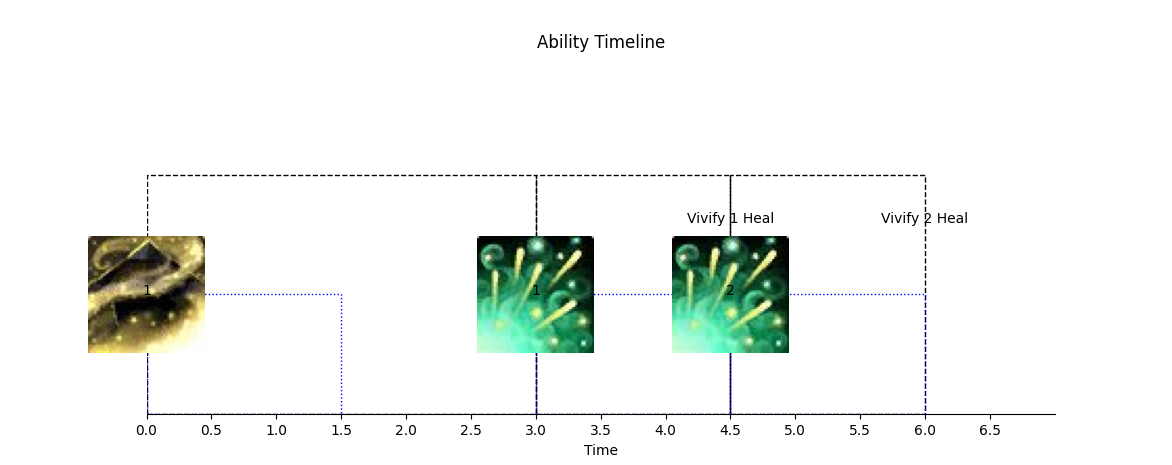
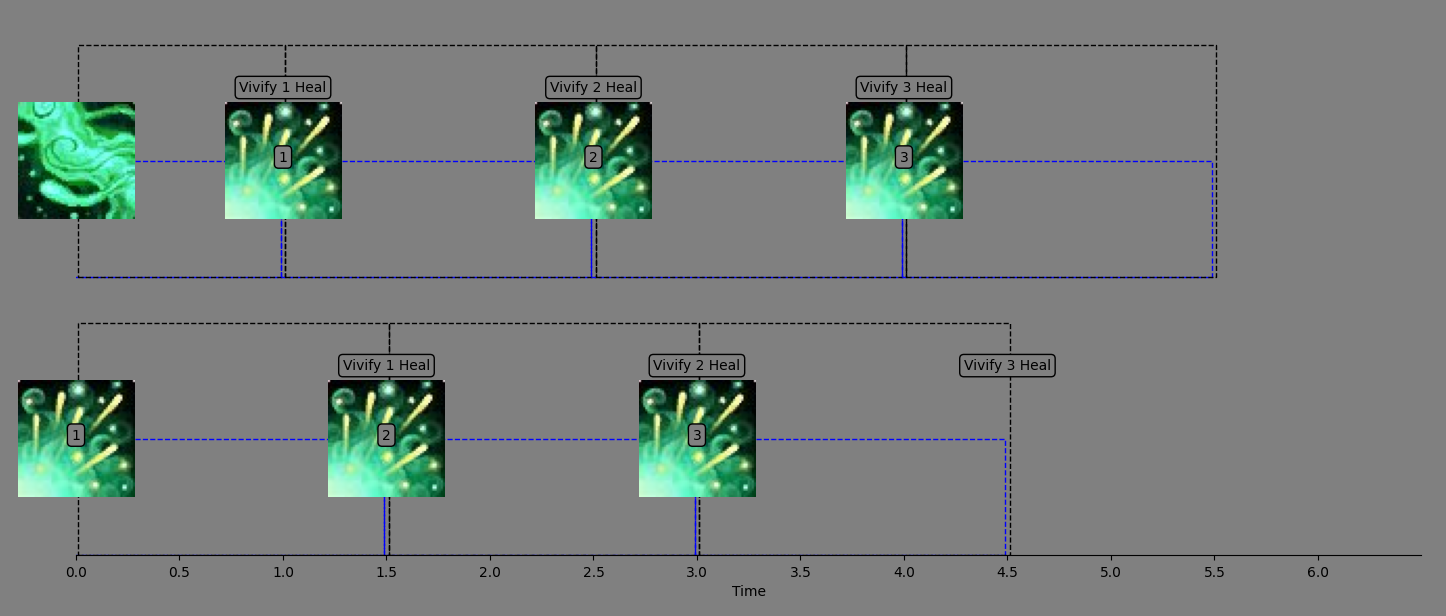

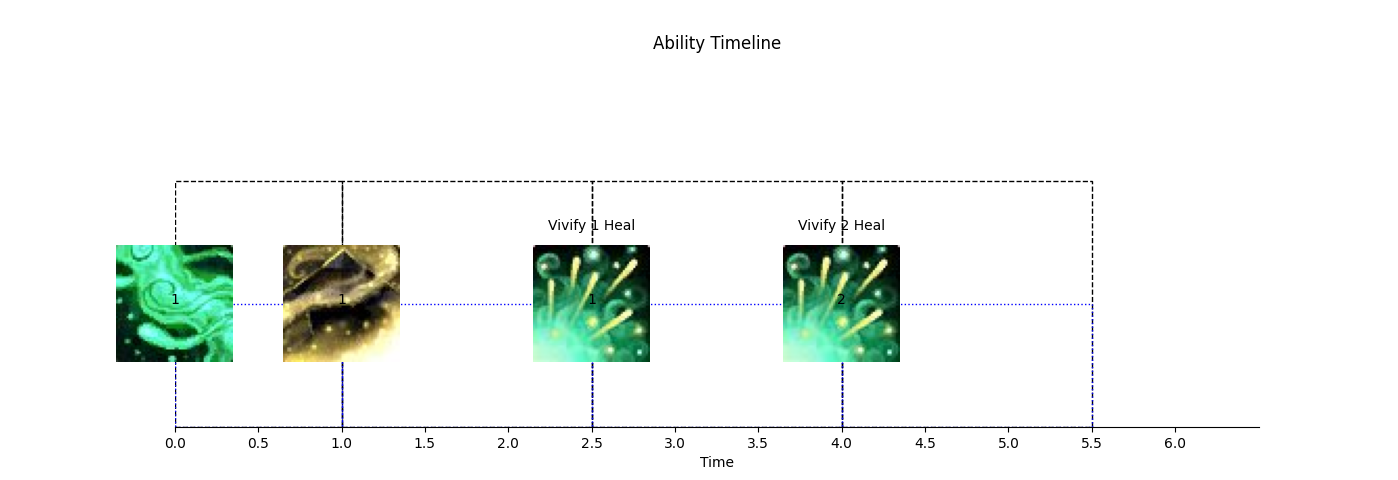
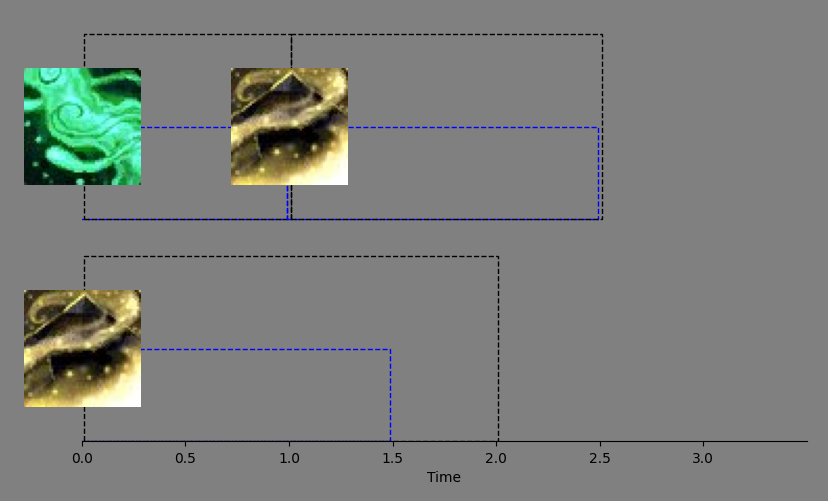

one of those scripts is, surprisingly, still in use. wow lets you replace its icons with your own .tga files, and i use the upscaled set from acidweb's clean icons: mechagnome edition, which look sharper than the originals. the script scans the site's spell data for the icons it needs, converts those files to png, and saves them to the site's icon folder, so the site shows the same icons i see in game.
the site itself started in february 2025, and the early code looks very different from what's there now. i started without knowing how to structure a frontend app, and each rewrite since has applied something i learned after the last one.
stack
built with: typescript, next.js, react, material ui, cloudflare
charts: chart.js, recharts, d3
data: simulationcraft's spell data, kept in sync by a scheduled claude code routine
stats
launched: feb 28, 2025
analysis pages: 14 distinct, 4 defunct
daily visits: ~300
monthly visits: ~8k, more at the start of a season
peak day: 30.8k
devices: 87.3% desktop, 12.6% mobile, 0.1% tablet
top countries: 36.6% united states, 9.0% germany, 7.4% france
most viewed: bugs, then when do i ramp?
codebase: ~20k lines of typescript across 175 files
commits: 933 as of oct 13, 2026